Our verdict
9.4/10The P1S has proved so capable that I now own three printers and two AMS units. My oldest P1S is still going strong after three years and approximately 7,500 hours of printing. Its speed, consistency, repairability and long-term reliability make it one of the easiest 3D printers to recommend, although the AMS remains the weaker part of the system.
After three years with an Ender 3V2, I upgraded to the Bambu Lab P1S and it completely changed my expectations of a consumer 3D printer. What started with one machine has since grown into three P1S printers and two AMS units, giving me extensive experience of the platform across regular printing, maintenance and multi-material work.
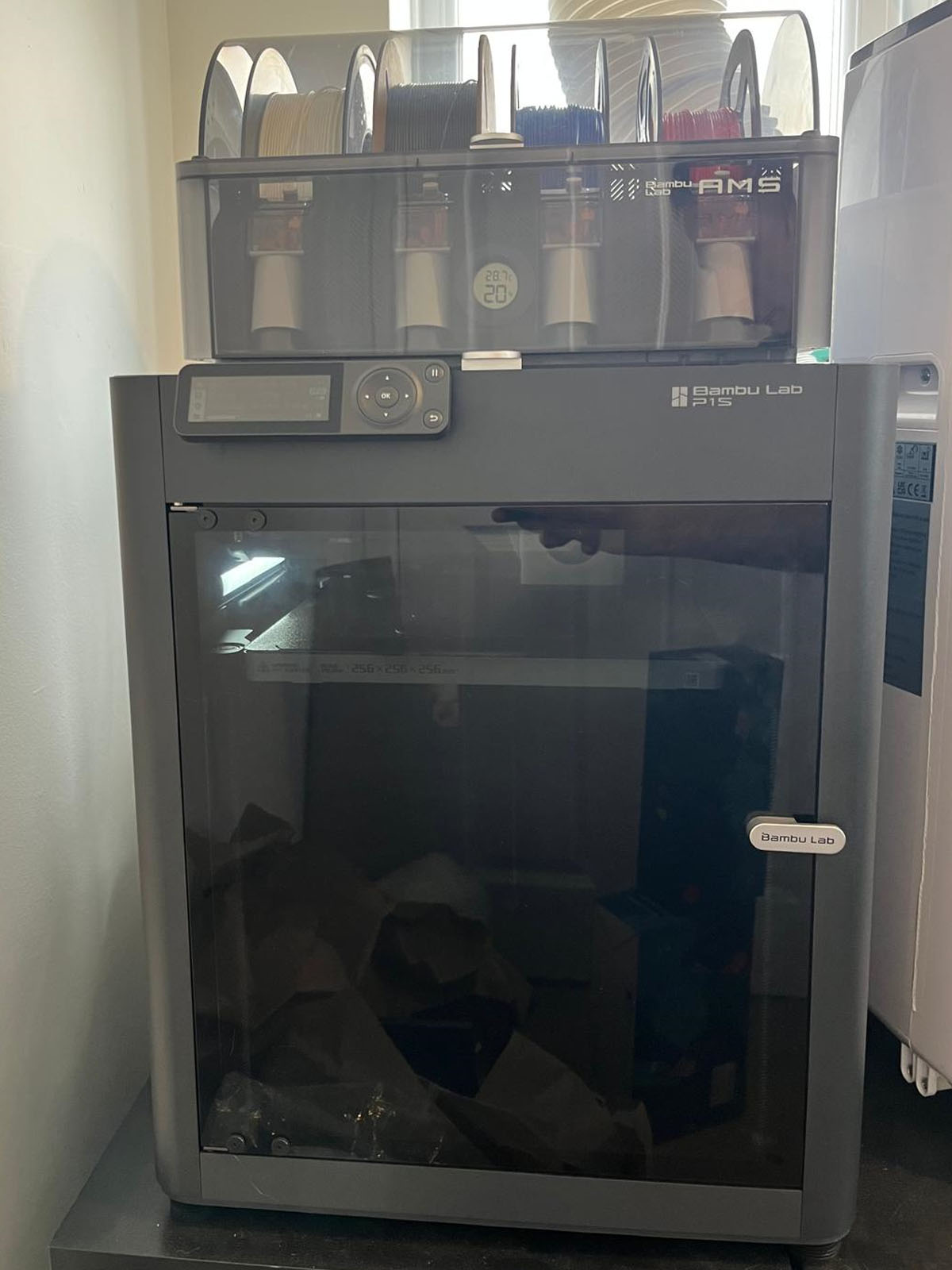
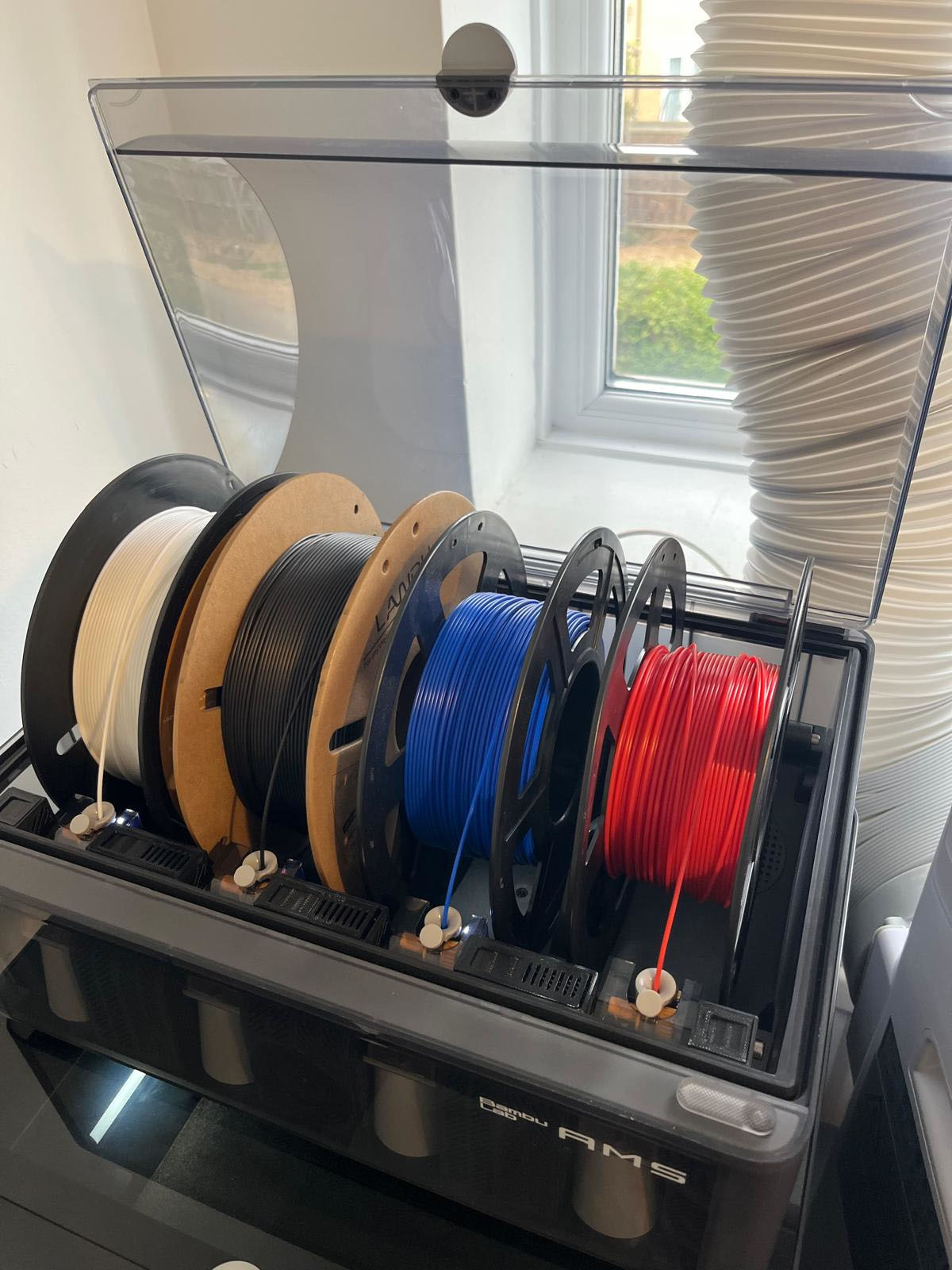
Three-year ownership update
My oldest P1S is now three years old and has completed approximately 7,500 hours of printing. It is still going strong and remains a dependable part of my setup. Reaching that figure without the printer becoming an ongoing repair project has given me far more confidence in the platform than any short-term test could.
The fact that I went on to buy another two P1S printers and a second AMS is probably the clearest indication of how positive the ownership experience has been. All three machines provide the same familiar workflow, so jobs can be moved between them without having to compensate for different printers or repeatedly adjust profiles.
Build Quality and Design
The BambuLab P1S is extremely impressive. The build quality and design of BambuLab products is fantastic. The addition of an enclosure, a key factor in my choice over the P1P, adds a layer of safety which is essential for cat owners like myself. The enclosure not only protects the prints from dust and curious paws but also allow for a wider range of filament compatibility. The heat that is retained in the enclosure really helps to prevent warping of parts on the bed too.
Printing Performance
The P1S delivers exceptional performance. I was mind blown coming from an Ender 3V2. Its core XY design and input shaping technology allow for insane high-speed printing without compromising quality. The speed that this printer is able to print parts has significantly improved my prototyping process, allowing for rapid production of parts. The auto bed levelling ensures a reliable first layer. Gone are the days of manually levelling the bed every couple of prints.
Noise is a minor issue. While the P1S isn’t excessively loud, I wouldn’t recommend placing it in a room where you plan to sleep or work in close proximity. Additionally, the printer requires a solid table or platform to minimise vibrations and movement at high speeds.
Check out my 16 minute 3D benchy with the Bambu PLA sample that came with the printer:
Software and Mobile App
The Bambu Handy app is a valuable tool for monitoring prints remotely, providing peace of mind when you’re away from your workshop. BambuStudio, in particular, is a significant upgrade from Cura (which I was using for my Ender previously), offering a more intuitive and feature-rich experience for slicing and managing prints.
AMS Experience
The AMS enhances the capabilities of the P1S by enabling multi-material and multi-colour printing. However, it’s not without its issues. Cardboard spools can be problematic, often getting stuck, scratching on the lid, or causing blockages, especially when nearing the end of the spool. Most filament manufacturers seem to be switching to cardboard spools now which I am not a fan of, although, there are still a few good brands using plastic spools.
I did encounter a problem with the AMS filament buffer after about three months of ownership. Fortunately, BambuLab’s support team was fantastic in diagnosing the issue and sending a replacement part within four working days, which resolved the problem. I really wasn’t expecting such a good warranty service.
Reliability and Maintenance
Across all three printers, reliability has been excellent. My oldest machine has now passed approximately 7,500 print hours and continues to perform strongly after three years. Maintenance has largely consisted of the expected periodic lead screw lubrication, nozzle changes roughly every 1,500–2,000 hours and PTFE tubing replacement at around 2,000-hour intervals. Aside from that routine work, the printers have behaved like workhorses and continue to produce consistent results.
The AMS is a great idea and the consumer level multi material product. As mentioned it’s not without it’s faults and it’s the weakest link in terms of reliability in my setup, but that is the trade off for multi material/colour prints. There is plenty of room for improvement and I hope and believe that future iterations will see big improvements.
BambuLab offer a huge number of replacement and spare parts on their online shop. The prices are very reasonable. The replacement procedures are well documented on their wiki and they also have many YouTube video tutorials.
Conclusion
Overall, the Bambu Lab P1S is an outstanding 3D printer that I would not hesitate to recommend to either a new or experienced user. Its high-speed printing and consistency make it an enormous upgrade from older hobbyist machines. Three years, three P1S printers, two AMS units and 7,500 hours on my oldest machine have only strengthened that view. The AMS is a valuable addition for multi-material and multi-colour printing, but it still requires more patience than the printer itself. Bambu Lab has produced a remarkably polished and repairable platform that continues to earn its place in my setup.